
Audit and Impact Assessment
Mukhyamantri Majhi Ladki Bahin Yojana — Statewide Social Impact Assessment
The Mukhyamantri Majhi Ladki Bahin Yojana is one of the Government of Maharashtra’s largest flagship social welfare initiatives, aimed at improving the financial security and socio-economic wellbeing of women across the State. To support evidence-based programme evaluation and future policy planning, the Department of Women & Child Development commissioned a comprehensive statewide Social Impact Assessment in collaboration with IIT Madras. Pristine Concepts served as the Implementation Partner for the study.
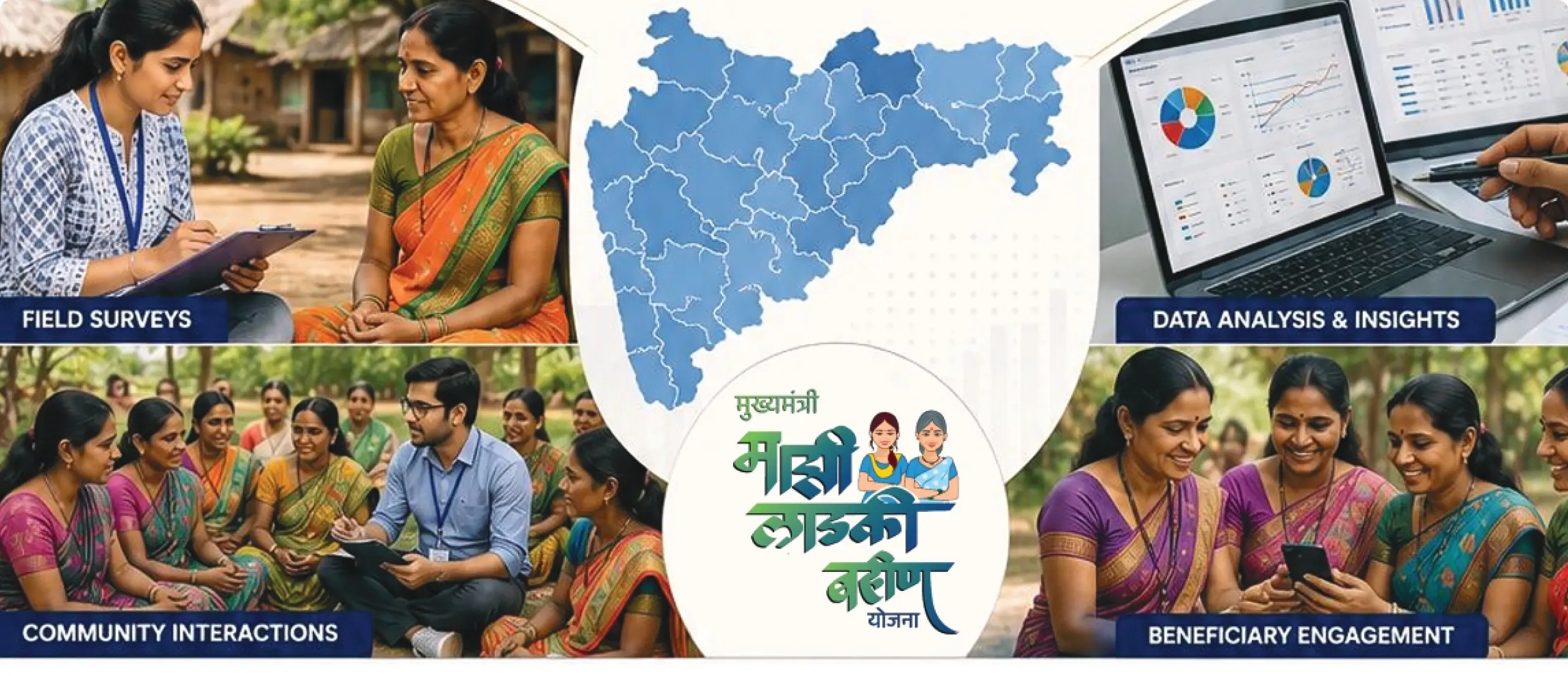
What We Did?
- Planned and coordinated end-to-end field operations across multiple districts of Maharashtra.
- Deployed RootStory, our proprietary digital data collection platform, to run a mobile-enabled survey ecosystem with real-time progress monitoring and geo-enabled field documentation.
- Trained and deployed field investigators, and engaged directly with beneficiaries using structured survey instruments capturing both quantitative data and qualitative insights on programme awareness, utilisation and perceived benefits.
- Instituted SOPs, training proctocols, multi-level quality checks and centralised monitoring to ensure consistency across all stages of data collection.
- Applied AI-assisted analytical processes to synthesise large-scale datasets, and converted findings into communication-ready outputs.
- Delivered executive summary reports, comprehensive technical reports, district-wise analytical summaries, visual dashboards, data visualisations, infographics, beneficiary narratives, policy presentations and a digital evidence repository.
Scale
129,081
Beneficiary Interviews
Scheme beneficiary + Family
5,650
Merchant Surveys
Merchant Surveys
134,731
Total Interviews
36
District Covered
All of Maharashtra
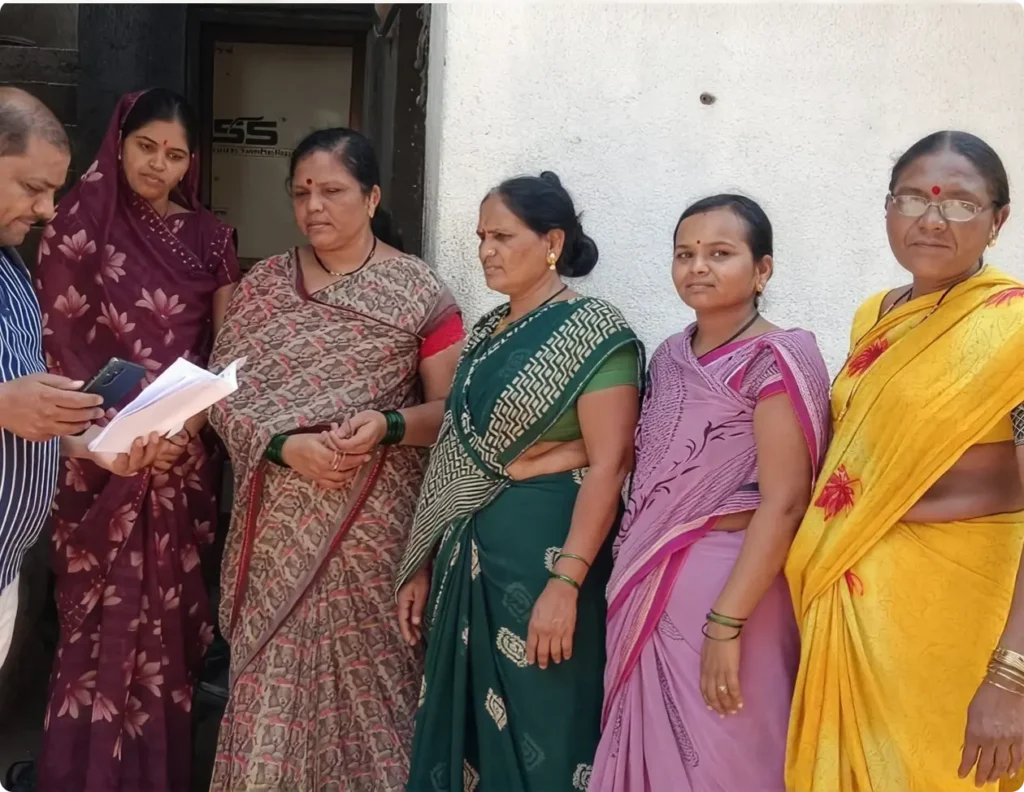
Outcome
- Successful execution of statewide beneficiary engagement activities within a single integrated implementation model.
- Creation of a digital evidence repository supporting ongoing programme evaluation.
- Communication-ready reports and visual analytics that made complex field data accessible for administrative review and strategic planning.
- Improved visibility of programme implementation through structured documentation, and actionable insights to guide future policy planning and programme refinement.